







We are getting into the midst of the busiest shopping season of the year. Imagine a busy customer searching for the perfect holiday gift, worried they’ll come up empty-handed. Suddenly, their phone buzzes with a back-in-stock alert for exactly the item they’ve been hunting for. A perfect scenario for a business and a saved holiday for a customer. But how to turn this into reality?

Back-in-stock alerts 101
A back-in-stock alert is a timely notification that tells a customer their desired item is available again. Simple, smart, and effective, these alerts bring relevant products in front of customers’ eyes. Studies show that these notifications have the potential to recoup more than 50% of missed sales opportunities.
They don’t just recover sales, but help build stronger relationships with customers:
- Notifications prompt shoppers to revisit products they already liked, increasing engagement and click-through rates.
- Personalized experiences tailored to past behavior show customers they’re seen and understood, fostering loyalty and repeat purchases.
- By quickly moving inventory from restocked to sold, brands can streamline operations, foster sales cycles, and reduce the risk of customers switching to competitors.
Smart alerts drive results
Here’s how to make sure back-in-stock alerts deliver value for both your business and your customers:
- Spot high-demand items
Start by tracking your inventory trends. Identify which products sell out quickly and build a list of high-demand items. This isn’t just about stock levels. It’s about understanding what your customers love and anticipating their next move.
- Connect with customer data
Notifications sent to the right audience at the right time can triple the likelihood of action. For example, alerts based on purchase history or wishlist items can increase open rates by up to 400%. You can access this information with CRM and CDP tools to trigger personalized alerts. Brands on Viber integrate their systems and customer databases with business messages to enhance the customer experience and see users re-engaging, with message open rates exceeding 70%.
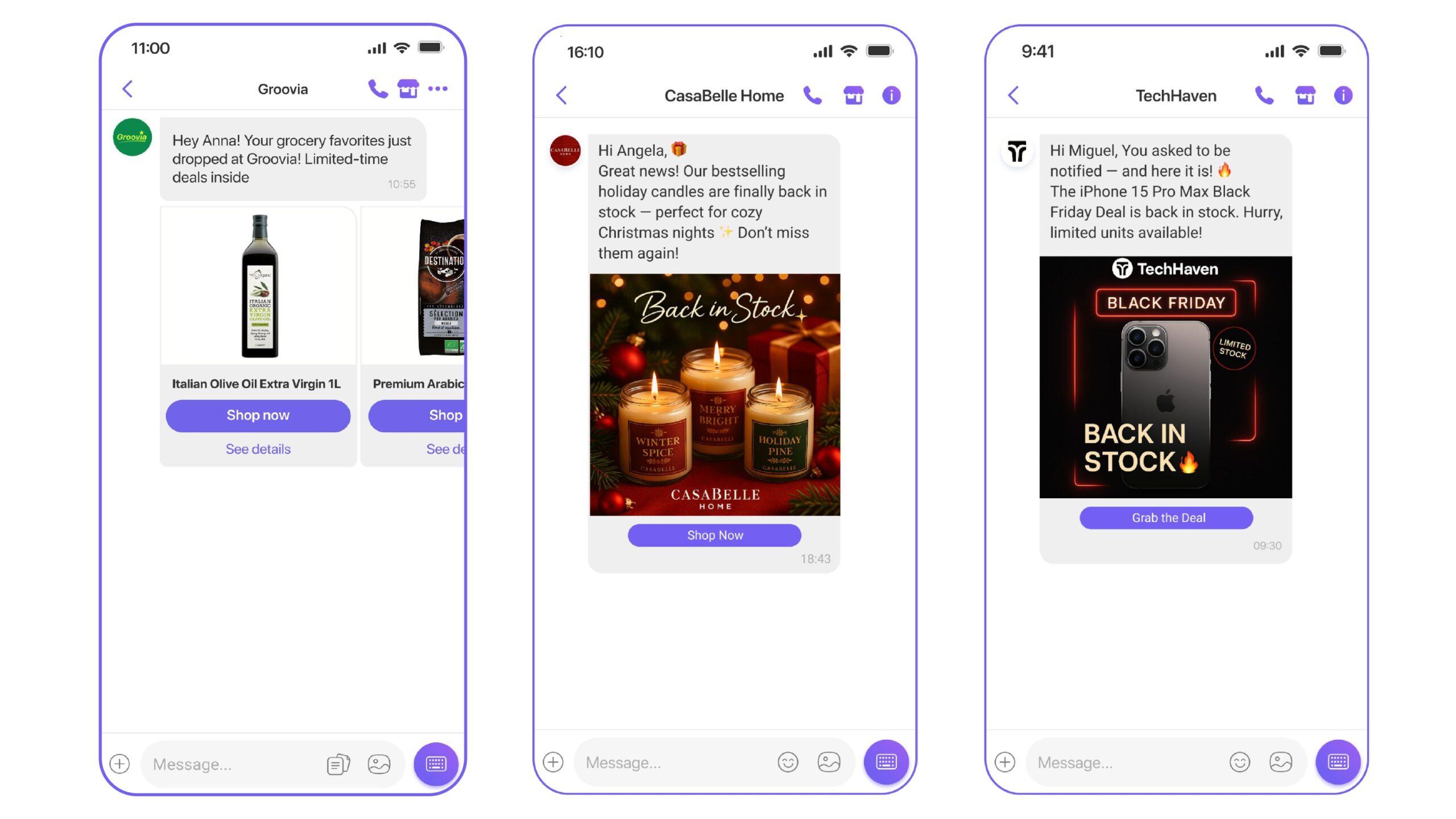
Examples of back-in-stock alerts (courtesy of Rakuten Viber)
- Set up triggered notifications
Automate your alerts so they reach customers the moment their desired items are back in stock.
- Enhance with media
Add rich media to your alerts to showcase your products. Rich formats, including images or videos, can lead to a 25% boost in open rates. They make your messages stand out, turning them from “just another notification” into a compelling shopping prompt. For example, brands on Viber use images and videos to support back-in-stock alerts and remind customers about the products they were once interested in. Emojis can also make alerts more appealing, resulting in a 20% improvement in open rates.
- Time wisely
Timing matters. Sending notifications during peak activity periods in your industry can deliver up to a 40% increase in opens. In general, early evenings and weekends work best for retail, lunchtime and early evenings for food or restaurants, and mid-morning weekdays for finance. The key is to test, learn, and align timing with your customers’ real habits, not just standard benchmarks.
- Simplify purchase
Make sure customer data, such as addresses and payment details, are saved so time-pressed shoppers can complete orders quickly and effortlessly.
- Analyze and adjust
Track performance metrics like open and click-through rates. Use these insights to fine-tune your approach and keep your notifications engaging and effective over time.
Turning alerts into action
Back-in-stock alerts are not just a courtesy. When done right, with timely messages, personalized touches, and eye-catching visuals, they pull customers back in and make their shopping experiences better. During the season’s rush, they can be the defining reason to choose the business – and stay with it after the purchase is done.