





As nearly six in 10 Filipino families rely on water refilling stations, PUREAL Philippines sees an opportunity to make drinking water more convenient while helping households make informed choices about water quality and everyday health.
For many Filipino families, ensuring there is enough drinking water at home is part of the daily routine. From ordering water refills and waiting for deliveries to finding space for bulky containers, keeping drinking water readily available requires time, effort, and planning.
According to the Philippine Statistics Authority’s (PSA) Annual Poverty Indicators Survey, 57.9% of Filipino families obtained their drinking water from refilling stations, highlighting how widely this practice is embedded in everyday Filipino life.
While water refilling stations remain an important source of drinking water, changing household needs are encouraging families to explore other options. For some, directly connected water filtration systems may offer a more convenient way to access drinking water at home or in the workplace.
For Vince Ngo, President and Managing Director of Visionary Grand Corp., the company behind PUREAL Philippines, the opportunity is to help Filipinos rethink how they manage one of their most basic daily needs.
“When we talk about water security, it’s not just about having water available. It’s also about knowing whether that water is suitable for drinking and whether families can access it consistently and conveniently. These are everyday concerns for Filipino households, and we believe families should have more practical options to address them,” Ngo said.
Importantly, the PSA’s 57.9% figure describes where families obtain drinking water. It does not determine whether those sources are safe or unsafe. The PSA separately monitors access to safely managed drinking-water services, which considers accessibility, availability, and freedom from contamination.
Beyond the Refill: Making Everyday Drinking Water More Convenient
For families that depend on refilling stations, maintaining a steady supply of drinking water often means keeping track of consumption, arranging deliveries, and allocating space for water containers.
These routines can be manageable, but they may become challenging for households with limited storage, busy schedules, or inconsistent delivery access.
Ngo believes convenience deserves greater consideration when families evaluate their drinking-water options.
“The cost of drinking water is not just what a family pays per refill. There is also the time spent arranging deliveries, the space needed for containers and the responsibility of keeping water on hand. Those everyday demands deserve attention, alongside water quality and the full cost of any alternative,” he explained.
Home filtration systems offer one possible alternative, particularly for households with a suitable incoming water supply. However, choosing a system also requires considering installation requirements, filter replacement, maintenance expenses, and whether the technology is appropriate for the household’s water source.
A Korean Inspiration Finds Its Way to Filipino Homes
The idea behind PUREAL Philippines began with an everyday convenience that Vince Ngo and his sister, Venice Ngo, Co-Founder and Growth Director of Visionary Grand Corp., encountered during visits to South Korea.
There, they noticed water purifiers integrated into hotels, cafés, and other everyday spaces. What stood out was how naturally these systems fit into people’s routines, making access to drinking water simpler without the need to manage multiple refill containers.
That experience prompted the siblings to explore whether the same approach could work for Filipino households and businesses.
“Whenever Venice and I traveled to Korea, we noticed how naturally water purifiers were integrated into everyday spaces. It was such a simple convenience, yet it made us wonder why more Filipinos couldn’t enjoy the same thing in their own homes and workplaces. We experienced that ease abroad, and we wanted to bring it home,” Ngo shared.
Their experience eventually led them to introduce PUREAL to the Philippine market through Visionary Grand Corp. The company aims to make modern water filtration more accessible to households, condominiums, cafés, restaurants, and workplaces.
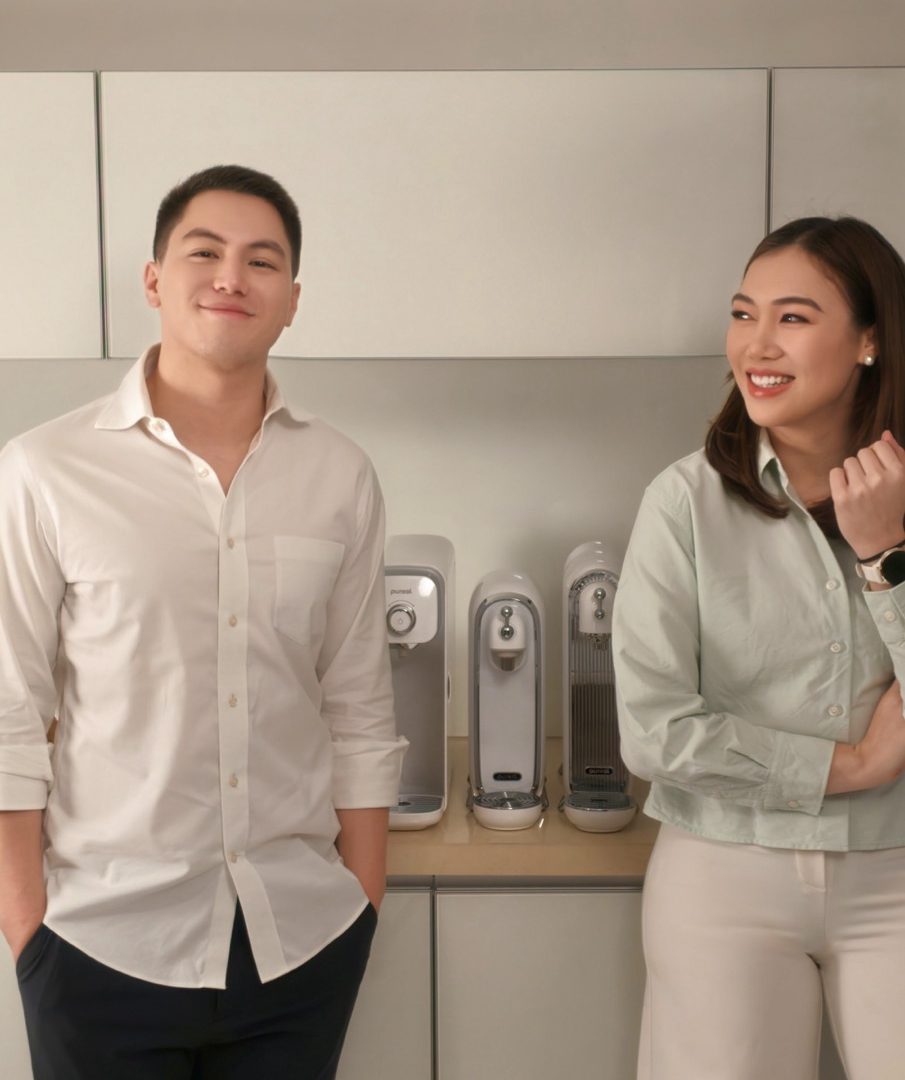
<text color=”secondary” size=”sm”>Photo caption: Siblings Vince Ngo (left), President and Managing Director, and Venice Ngo (right), Co-Founder and Growth Director of Visionary Grand Corp., lead PUREAL Philippines with a shared vision of helping Filipino households and businesses make informed drinking-water choices through modern filtration technology. Photo courtesy of PUREAL Philippines.</text>
Bringing Water Filtration Into Everyday Life
PUREAL Philippines offers several options designed to fit different spaces and routines. Its Direct, Mini Changer, and Line Changer collections use tankless, direct-flow filtration technology that connects to a suitable incoming water supply.
Unlike powered hot-and-cold water dispensers, these models provide filtered water at ambient temperature without requiring electricity. Their user-replaceable filters also allow customers to perform routine filter changes without necessarily scheduling a technician.
For families, this setup may reduce the need to store and handle refill containers. In workplaces and food establishments, it offers another way to incorporate drinking-water access into daily operations.
However, filtration systems still require proper installation and regular maintenance. Consumers should confirm that their water source, pressure, and installation conditions are compatible with the chosen model. They should also check the system’s documented filtration capabilities to determine whether it addresses the contaminants relevant to their water supply.
Because the featured models depend on a functioning incoming water supply, they cannot provide water during a supply interruption. Keeping emergency drinking water available remains important.
Supporting Homes, Cafés, and Workplaces
Beyond residential use, PUREAL Philippines is bringing its filtration systems to commercial establishments through its PUREAL Partners initiative.
Participating establishments include 717 Deli, Three Dots, Hackensack, and Jabroni’s, reflecting the company’s efforts to expand its presence in spaces where convenient access to drinking water is part of everyday operations.
For businesses, filtration systems may provide an alternative to managing refill containers, depending on their water requirements, customer volume, and installation setup. As with households, the decision involves weighing convenience against equipment costs, filter replacement, maintenance, and water quality requirements.
Helping Families Make Informed Drinking-Water Choices
As Filipino households explore different ways to access drinking water, Ngo believes the conversation should focus on more than convenience alone.
Water quality, consistent supply, accessibility, and proper maintenance remain important considerations. Refilling stations, bottled water, and household filtration systems can each serve different needs, depending on the circumstances of the family or business.
“For years, many Filipino households have relied on buying, collecting, or having drinking water delivered. We believe there is an opportunity to rethink that routine as more filtration options become available. Our goal is not simply to introduce another water purifier, but to help Filipinos see that accessing drinking water can be more convenient and integrated into everyday life,” Ngo said.
Through PUREAL Philippines, Visionary Grand Corp. plans to expand its presence in Filipino homes and commercial spaces while strengthening consumer education and local after-sales support.
Ultimately, the goal is to give households more options and help them make choices that suit their needs, budgets, and water sources.
For Filipino families, making drinking water part of a healthier daily routine begins with understanding where their water comes from, whether it is suitable for consumption, and how best to ensure a reliable supply. With greater awareness and access to appropriate solutions, households can make more informed decisions about one of their most essential everyday needs