
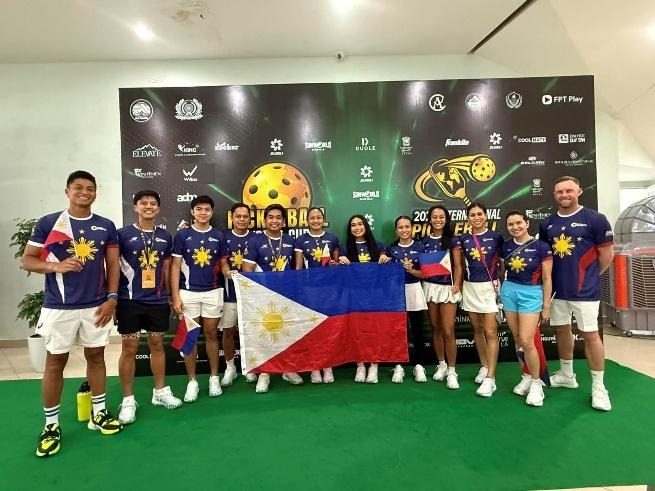






Philippine athletes bring home six medals from the 2026 Pickleball World Cup, showing how a growing sport is creating new opportunities for Filipino players
What may have started for many Filipinos as a weekend activity, a new way to stay active, or a friendly game with family and friends is becoming something much bigger.
Pickleball is steadily finding its place in the Philippines, and for Filipino athletes, the growing sport is opening a path from local courts to international competition.
From August 30 to September 6, the Philippine national pickleball team represented the country at the 2026 Pickleball World Cup in Da Nang, Vietnam, bringing with them not only their skills but also the determination and competitive spirit that have become part of their journey.
The Philippine Pickleball Federation (PPF) national team was supported by B’lue as its official hydration partner during the international tournament.
For PPF president Shery Anne Cu, competing internationally is about more than what happens on the scoreboard.
“Filipino athletes have a combination of heart, resilience, and competitiveness that really comes out when we are tested,” Cu said. “We may not always have the same resources, training infrastructure, or years of exposure, but Filipinos know how to fight. We adapt and we don’t give up easily.”
Six Medals, Many Stories
The Philippine delegation returned from the World Cup with six medals—four silver and two bronze—across singles and doubles events.
The podium finishes came from men’s singles, women’s singles, women’s doubles and mixed doubles, with Filipino players making their mark across different age and skill categories.
In the Open team competition, the Philippines finished 11th among 64 countries, after sweeping its round-robin group and advancing to the round of 16.
The Masters team placed 12th among 20 countries, while Filipino representatives also competed in the Seniors, Juniors and Kids categories.
Behind those numbers are athletes of different ages and backgrounds sharing the same court—and the same opportunity to represent their country.
For the younger players in particular, competing against athletes from other countries offers lessons that cannot always be learned during local training. Every match becomes experience, every opponent becomes a learning opportunity, and every international appearance becomes another step forward.
The Journey Doesn’t End With the Final Point
For athletes, the end of a tournament is rarely the end of the journey.
The final rally in Da Nang may have closed the World Cup campaign, but the experience gave the Philippine delegation a clearer picture of the level of international competition—and what they can continue working toward.
B’lue supported the national team throughout the tournament as its official hydration partner, reflecting its commitment to supporting athletes as they take on demanding challenges.
For the players, the bigger goal is to keep improving: more training, more competitions and more opportunities to test themselves against the best players from around the world.
A Sport With Room to Grow
The growing presence of young Filipino players is also giving pickleball a longer future in the country.
For aspiring athletes watching from local courts, the national team’s journey offers a glimpse of what could be possible with dedication and opportunity. A sport that can begin with a simple game among friends can eventually lead to representing the Philippines on an international stage.
Cu believes the country has the ingredients to develop further in the sport.
“The Filipino edge is that our athletes don’t decide what they’re capable of based on who is standing across the net. They compete, they adapt, and they fight until the last point,” she said.
That determination may be one of the most important things Filipino players carry with them as they continue to compete.
Looking Ahead
With six medals, strong team finishes and younger athletes gaining international exposure, the Philippine pickleball community has plenty to build on.
Cu sees an opportunity for the next generation to develop their skills earlier and gain more experience internationally.
“That’s why I believe other countries should watch the Philippines,” she said. “We have athleticism, speed, creativity, and that natural Filipino competitiveness, but we also have a generation of young players coming up who are starting to get international exposure much earlier.”
For now, the message is simple: keep playing, keep learning and keep going.
Because somewhere on a neighborhood court, another young Filipino player may be picking up a paddle for the first time—and dreaming of the day they, too, get to wear the Philippine colors on the world stage.