






Filipino industrial designer Joshua “Joshi” Li transforms cultural symbols, traditional craftsmanship, and stories passed down through generations into a contemporary lighting collection that celebrates the evolving identity of Filipino design.
Heritage is more than something we inherit. It is something we continue to shape, reinterpret, and pass on to the next generation.
This philosophy comes to life in Pamana: Tanglaw, the latest collection by Filipino industrial designer Joshua “Joshi” Li, unveiled on September 19 through a special collaboration with Ayala Museum.
Exploring the relationship between Filipino identity, tradition, and modern technology, the collection transforms familiar cultural symbols into contemporary lighting pieces that celebrate the country’s rich heritage while embracing the possibilities of modern design.
For Joshi, who describes himself as an Ancestral Futurist, tradition is not something that should remain confined to the past. Instead, it can evolve through new creative expressions, materials, and technologies.
The inspiration for Pamana began with an everyday Filipino object: the salakot, the traditional farmer’s hat.
Driving through his family’s farmland, Joshi found himself looking at the familiar headwear from a designer’s perspective, realizing that cultural identity could serve as the foundation of product design.
“Form follows culture,” he shares, explaining how the experience inspired him to translate Filipino pride into functional art—objects that are both practical and meaningful.
When Filipino Heritage Becomes a Source of Light
At the heart of Pamana: Tanglaw is the Filipino word tanglaw, which means light or beacon.
But for Joshi, light represents more than illumination. It symbolizes guidance, hope, memories, and the familiar warmth of home.
In Filipino households, light often accompanies family gatherings, celebrations, and everyday moments. It welcomes loved ones, creates a sense of comfort, and becomes part of the memories shared across generations.
“It’s a light from the past, carrying our history, our culture, the stories we grew up with, and lighting the path ahead,” Joshi explains.
The collection also has a personal connection to the designer, whose family has long been involved in the lighting business. Growing up, he witnessed his mother’s passion for lighting, eventually developing the same appreciation for its emotional and functional significance.
Through Tanglaw, he transforms this personal connection into a collection that brings together storytelling, cultural identity, and contemporary craftsmanship.



Five Designs, Five Stories of Filipino Identity
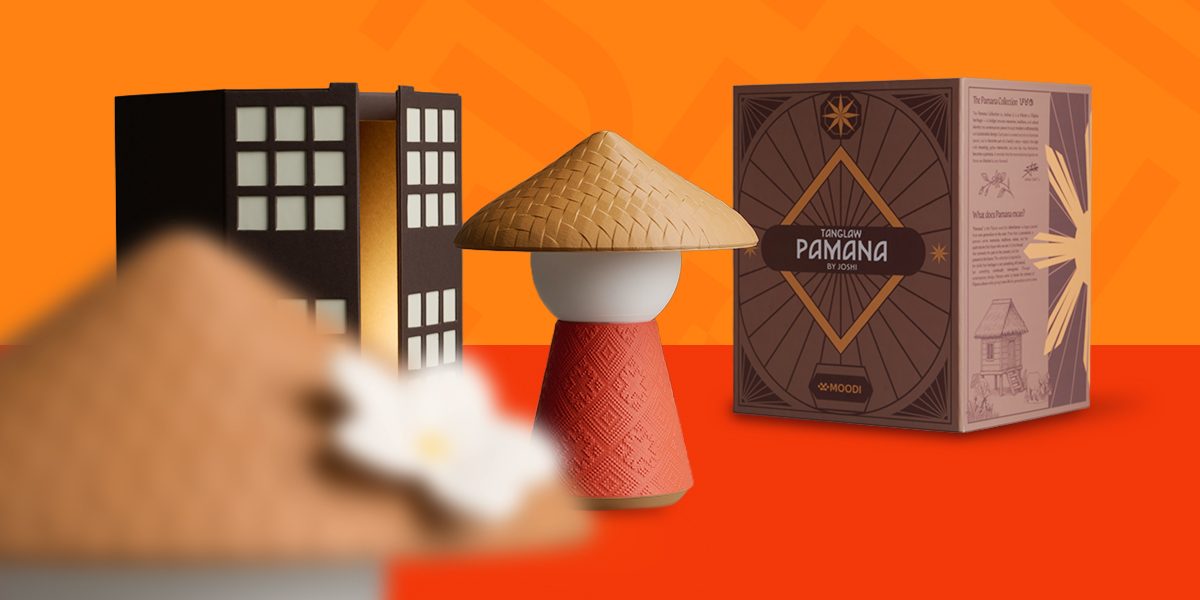
One of the defining features of Pamana: Tanglaw is its shared design silhouette, inspired by a woven salakot resting above an illuminated form.
This familiar Filipino element connects five distinct interpretations of cultural identity, each drawing inspiration from different aspects of the country’s history and traditions.
The collection references iconic Filipino figures and garments, including the Barong, Filipiniana, Katipunero, and Maria Clara. Another design, Habi, celebrates the country’s rich weaving traditions and the generations of artisans who have preserved these techniques.
Rather than directly reproducing traditional objects, Joshi translates their defining characteristics into contemporary textures, geometric patterns, and silhouettes.
Embroidery becomes an intricate surface detail, while weaving traditions are expressed through modern geometry. The result is a collection of lighting pieces that retain their cultural references while embracing a distinctly contemporary aesthetic.
Each design tells its own story, but together they create a broader narrative of Filipino identity—one that remains rooted in history while continuing to evolve.
3D Printing Bridges Tradition and Innovation
While the collection draws heavily from ancestral influences, its production embraces modern technology.
Using 3D printing and sustainable PLA material, Joshi explores intricate textures, patterns, and forms that bring traditional references into a contemporary design language.
For the designer, technology and heritage are not opposing ideas. Instead, modern fabrication methods offer new opportunities to reinterpret cultural knowledge and make it relevant to younger generations.
“The juxtaposition of telling stories from the past through futuristic, contemporary fabrication like 3D printing is exactly what being an ancestral futurist means,” he explains.
This approach reflects a growing possibility for Filipino design: using innovation not to replace tradition, but to give it new expressions.
Keeping Filipino Stories Alive Through Design
Beyond its aesthetic appeal, Pamana: Tanglaw carries a message about how cultural heritage can remain relevant in a rapidly changing world.
Joshi hopes the collection encourages younger generations to appreciate their roots while exploring new ways to express Filipino identity through creativity and technology.
He also hopes older generations will see how contemporary manufacturing can preserve cultural connections while opening new possibilities for product design.
For him, inheritance is not simply about preserving what previous generations have left behind. It is about actively working with those traditions, giving them new meaning, and allowing them to grow.
Through Pamana: Tanglaw, Joshi presents a compelling vision of Filipino design where ancestral stories and futuristic technology coexist—not as separate worlds, but as parts of one continuing cultural journey.
Where to See and Get the Collection
For design enthusiasts, collectors, and those who appreciate Filipino-inspired home pieces, Pamana: Tanglaw is available for viewing and purchase at the Ayala Museum Shop, Kultura, Design Story, and through the Moodi Design website.
Collection prices are as follows:
- Tanglaw Lamps: PHP12,000 each
- Tanglaw Mini Blind Boxes: PHP799 each
For more information, visit moodidesign.ph, follow Moodi Design on Facebook, or connect with Joshi through Instagram at @joshi.dsgn.
With Pamana: Tanglaw, Filipino heritage finds a new place in contemporary homes—reminding us that the stories we inherit can continue to shine through every generation.