






A healthy workforce is increasingly becoming a business imperative, as obesity continues to impact employee productivity, attendance, and healthcare costs across the Philippines. At the forum “Healthy Workforce, Stronger Business: Insights from the EpiCOb-PH Study,” organized by Novo Nordisk Philippines and the European Chamber of Commerce of the Philippines (ECCP), experts revealed that obesity and overweight conditions affect an estimated 29 million Filipino adults and cost the Philippine economy approximately Php 1.9 trillion each year.
The event brought together business leaders, healthcare experts, and policymakers to discuss the growing impact of obesity on workforce productivity, healthcare costs, and long-term business performance, as well as strategies to address the burden of the disease.

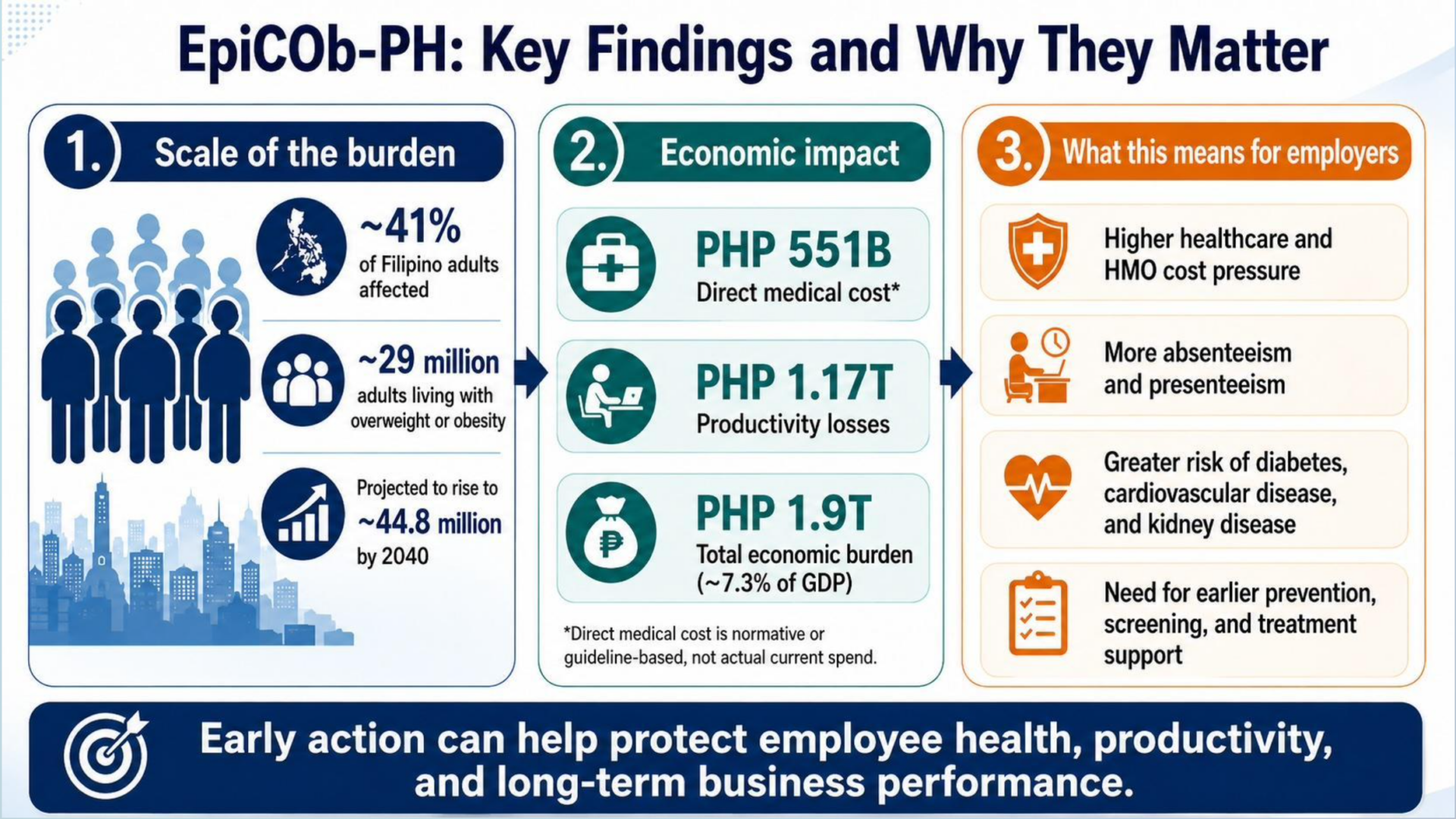
Presented during the forum were the key findings from the Epidemiological Burden and Cost of Obesity in the Philippines (EpiCOb-PH) study, one of the most comprehensive assessments of obesity’s health and economic impact in the country.
“The study shows that obesity and overweight are affecting an estimated 29 million Filipino adults, or about 41% of the adult population, and this number is projected to increase to 44.8 million by 2040,” said Dr. Madeleine Valera, principal investigator and primary author of the EpiCOb-PH study. “These findings highlight the urgent need for stronger prevention, early intervention, and long-term management strategies to address the growing burden of obesity in the country.”
Beyond its impact on health, obesity also carries significant economic consequences for businesses and the broader economy.
“Obesity is not only a health issue but also an economic one,” said health economist Dr. John Paul Caesar Delos Trinos. “Our analysis estimates a total economic burden of approximately Php 1.9 trillion annually, including Php 551 billion in direct medical costs and Php 1.17 trillion in productivity losses. These costs have significant implications for employers, healthcare systems, and the broader economy.”
Employee well-being
The study found that productivity losses account for the largest share of obesity’s economic burden, highlighting the disease’s impact on workforce participation and performance. Experts noted that obesity also contributes to rising rates of non-communicable diseases such as diabetes, cardiovascular disease, and chronic kidney disease, which can further increase healthcare costs and affect employee well-being.
“The impact of obesity extends beyond healthcare expenditures,” said biostatistician and mathematical modeler Dr. Robert Neil Leong. “It can affect workforce participation, increase absenteeism and presenteeism, and reduce overall productivity. As prevalence continues to rise, the effects will increasingly be felt across workplaces and communities.”
The forum also explored evidence-based approaches to obesity prevention and management, including workplace wellness initiatives and healthcare partnerships that can support employee health and improve long-term business outcomes.
“Advances in obesity care, including GLP-1 receptor agonists, are helping expand treatment options for patients. When combined with lifestyle interventions, these therapies can play an important role in a comprehensive, evidence-based approach to obesity management,” said Dr. Christiana Vida Montefalcon, Novo Nordisk Medical Manager for Clinical and Regulatory Affairs.
A panel discussion brought together experts from government, healthcare, research, and industry, including Dr. Marco Antonio S. Valeros, Medical Officer IV of the Department of Labor and Employment’s Bureau of Working Conditions; endocrinologist Dr. Queenie Villegas-Florencio of The Medical City; Dr. Valera; Dr. Leong; Dr. Delos Trinos; and Dr. Montefalcon. The panel discussed the implications of obesity on workforce health, productivity, healthcare utilization, and the role of employers in supporting prevention and treatment efforts.
The forum underscored the importance of coordinated action among businesses, healthcare providers, and policymakers to address obesity and support the long-term health and productivity of Filipino workers.
“Addressing obesity requires collaboration among employers, healthcare providers, and policymakers,” said Wei Sun, General Manager of Novo Nordisk Philippines. “By working together to improve awareness and access to care, we can help build a healthier, more productive, and more resilient Filipino workforce.”